
Childhood studies has spent a long time deconstructing “the child’s voice.” But what has this attention to children’s “voices” meant we overlook? Most child-centred research involves adult researchers, then children’s… Read more Denaturalising the “adult voice” →

Are children part of the public in “public health”? Using a critical discourse analysis of NZ’s Covid public health political & media messaging, we conclude: no, but children’s representations are TOOLS of public health, used to influence the adult public. What does this exclusion mean for children’s roles in public health crises – and for the health of the public?
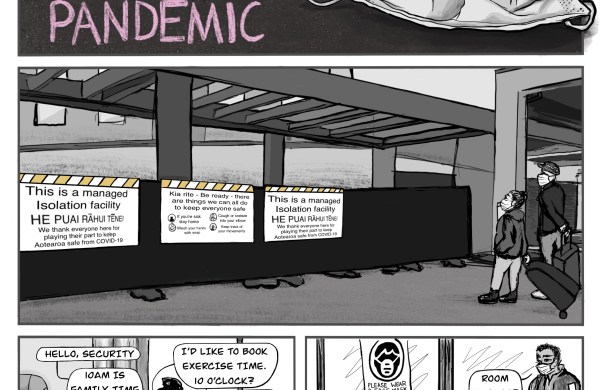
Re-childing the COVID-19 pandemic; and what we lose from the un-childed public “As the pandemic has shown, when children are neither seen nor heard they are easily forgotten from the… Read more What do we lose when we lose children? →

Analysing emotions such as love can enable new ways of understanding human relationships
and deepen reflexive ethnographic practice. Love in research with children, however, carries a unique set of implications
A Story of (what is?) Art and Online Research with Children During a Pandemic By Julie Spray, Jean Hunleth and Hannah Fechtel Spray, Julie, Hannah Fechtel, and Jean Hunleth. 2022.… Read more What do Arts-Based Methods Do? →

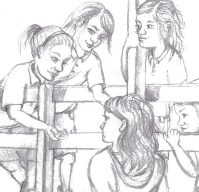
What happens when researchers draw with children?
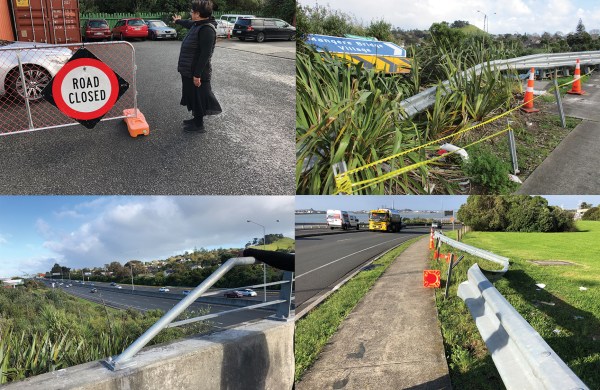
“The institutionalised privileging of Western paradigms in decision-making and the enduring nature of infrastructure converge to perpetuate an ‘infrastructural violence’ (Rodgers and O’Neill 2012) upon Aotearoa’s Māori peoples, inflicting harms… Read more Inequitable mobilities: intersections of diversity with urban infrastructure influence mobility, health and wellbeing →
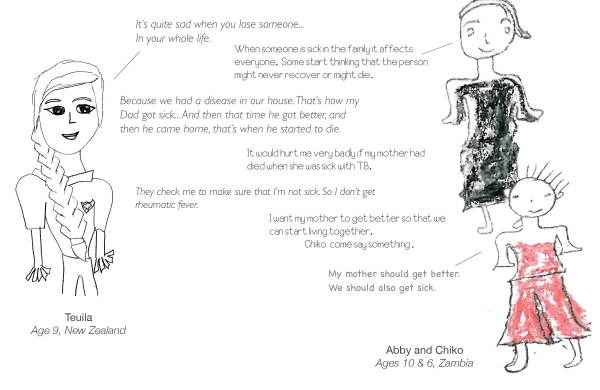
“The problem here is that Abby’s, Chiko’s and Teuila’s experiences with TB and RF programming have been invisible to the adults who design and fund the health programmes that shaped their lives. And we see this troubling trend in public health and policy approaches to COVID-19.”
 Julie Spray