For what does research matter?
Following the announcement that New Zealand is cutting funding to social science and humanities research, Julie Spray argues for the value of funding research of unmeasurable value.

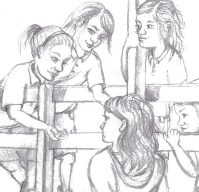
Image credit Julie Spray
I was alarmed to read the news that the Marsden Fund, New Zealand’s major research funder, will no longer be supporting humanities and social science research. According to Science, Innovation and Technology Minister Judith Collins, the cuts are because fields like physics, chemistry, engineering and biomedicine “made more of an impact on the economy.”
Since when does research, the process through which we generate our society’s body of knowledge, only matter for the economy?
I got my PhD in anthropology from the University of Auckland at a time when the squeeze of academic capitalism was already upon New Zealand institutions. Our anthropology department was ranked in the top 50 globally, producing new understandings of New Zealand phenomena from the overlooked grief of our 1916 flu epidemic to how power and symbolism maintain the Crown’s influence. At first glance, you might wonder why this research is valuable. It certainly doesn’t make us money. But humanities and social science research is never just about the particular subject we’re examining. We use case studies to develop new ways of thinking and to generate insights about how the human world works. By studying why the 1916 influenza epidemic was forgotten, for example, Dr. Heather Battles showed how our collective history gets influenced by state values and priorities. This matters for who among us is having their history preserved today, and who isn’t, and how tomorrow’s history is going to shape the future. Because when we understand why we are the way we are, then we can change it.
Unfortunately by the time I completed my PhD in 2018, social anthropology staff in my department had halved from restructures driven by economic concerns. We lost scholars whose research protected democracy and human rights, promoted health equity and citizenship, or mitigated suffering and prejudice. Economic is only one kind of value.
Another kind of value lies in challenging what we think we know about ourselves and the world. People tend to take for granted our everyday knowledge as natural truth without much question. Anthropology teaches us our knowledge is always cultural, always historically contingent and political. We don’t tend to realise, for example, we’re imagining history as a linear progression from primitive to sophisticated until archaeologists point out this is incorrect, often racist, and means we cannot become complacent about what we have. The future does not promise better lives, especially if we’re extinguishing whole fields of knowledge on the assumption that more marketable technology will advance us.
As a social scientist I study children’s perspectives on health and illness in New Zealand policy contexts. One reason I love research with children is because they are so misunderstood. You might think my research sounds “cute” but expendable because, after all, what do children know that adults don’t? My students think studying childhood will be easy. But we don’t know what we don’t know. Turns out we cannot see who children really are until we can grasp how power, discourse and representations work to reduce our conception of children to paper cut-outs of real humans, simple, vulnerable, incompetent and unknowing, the shadows on Plato’s cave wall. My research shows we underestimate the complexity of children’s social lives, so free school lunches need to attend to children’s dignity, not just nutritional requirements, or they won’t eat them. Children construct their own models of illness risk that shape their health behaviours, and so we need to account for their perceptions in our public health approaches to rheumatic fever or Covid-19. Without the social scientists, those in STEM fields are unknowingly designing their technologies and policies for children who don’t exist.
And, because we conceptualise children as adult’s opposite, this means we also systemically misunderstand adults. We create health systems, for example, assuming that unlike children, adults don’t need gentle care, clear explanations, consistent relationships with professionals, patience, help, reassurance, or to feel like they matter and belong. If you’ve ever felt like you “shouldn’t” need support that actually would’ve really helped, that’s adultism shaping your expectations. Once we know why things are the way they are, we can change them.
I now work in Ireland, a country that still values its knowledge treasury produced of literature, history, music, and art. As a social scientist I have learnt so much from colleagues who study English literature, socio-linguistics and philosophy. I’ve had the tremendous privilege of access to diverse perspectives, but the biggest thing I have learnt is how much I don’t know I don’t know. None of us do.
Because knowledge doesn’t work the way we think. Knowledge is social; it is produced, organised and communicated by humans, through human relationships and human-made infrastructures. Since our sociality is built on unequal power structures, our knowledge is also shaped by human hierarchies, prejudices and assumptions.
This means some knowledge fields are more dominant, recognised, valued and funded not because the knowledge is necessarily more useful or important, but because they’re more accessible, more useful to those in power, or more associated with masculinity and whiteness. Some fields are better known, are better at convincing us they’re better, or indeed, make us more money. But should we really be treating our society’s knowledge base according to free market principles?
Because educational psychology shows that when we’re presented with an idea that is radically different to what we already know—knowledge like, for example, evolutionary theory, quantum physics, critical race theory, critical social epistemology or adultism—it is much harder for us to grasp, apply, and recognise that knowledge because we need to fundamentally overhaul our cognitive architecture at a neurological level. Apprehending and integrating this kind of knowledge—what has been termed “threshold knowledge”—might require us to reconfigure our entire worldview, our politics, our identity, and everything we do. Knowledge can be scary, threatening, and existentially challenging, as well as inspiring and transformative. And this is why if you’ve only ever trained in the sciences you cannot know the value of humanities and social sciences. We do not know what we do not know. And, if your science training took place in a world that tells you “hard” science is superior, you may not think to wonder what you don’t know you don’t know about the “softer” kind. You might even make a dismissive comment about useless arts degrees.
Are we really to assume our present understanding of humanity is sufficiently complete that another century of social research would not reveal our foolishness? Do we know ourselves well enough to understand how we could be different? Are we sure the only way to value research is economic? Because if not, we could be gambling with something much more valuable than we know.
 Julie Spray